
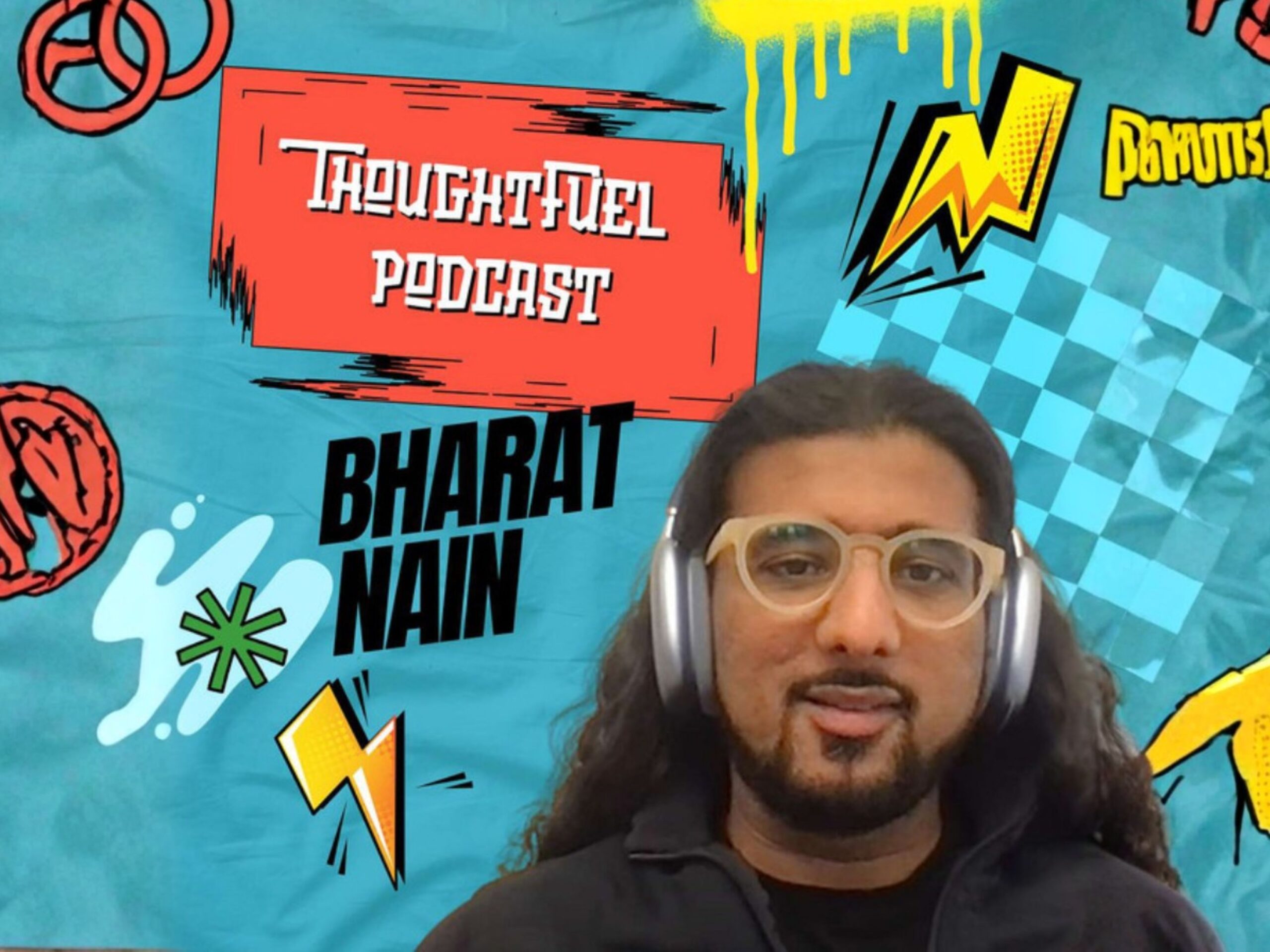
I had the pleasure of joining Nicos Marcou on the ThoughtFuel Podcast, a show dedicated to developing a positive mindset and helping people achieve more in life.
Nicos and I go back a few years, and this conversation felt like a natural extension of the work we've done together — from co-organizing a TEDx event to countless conversations about growth, identity, and what it actually takes to show up fully in the world.
Over the course of the episode, we covered a lot of ground: my journey of self-discovery across three continents, the role that public speaking training and therapy played in helping me understand who I am, and the practical tools I've leaned on — meditation, journaling, and intentional travel — to build a more grounded and intentional life.
Whether you're someone who's been thinking about putting yourself out there but hasn't yet, or you're deep in your own personal growth journey, I think there's something in this conversation for you.
Topics
Here's a quick overview of the key themes from the episode:
- Self-discovery and travel — How living across 13 states and visiting 20+ countries has pushed me to be more introspective, and why being alone with your thoughts is one of the most underrated growth tools available.
- Therapy, Hoffman Institute, and peeling back the layers — The foundational inner work that came before any public-facing growth, and why processing your first 15 years is one of the highest-leverage things an adult can do.
- Mindset, belief, and what it means to commit — What I've observed in massively successful people (many of whom I've met living in Mexico City), and why depersonalizing outcomes helps you stay in the game longer.
- Practical tools: meditation, journaling, and the five-minute journal — Specific frameworks I use to stay present, manage stress, and clarify my thinking before big conversations or creative projects.
Listen Now
Watch the full episode below, or watch it on YouTube.
PS: It's also on Spotify! listen on Spotify.
Full Transcript
Nicos Marcou: Welcome everybody to the ThoughtFuel Podcast, a podcast dedicated to developing a positive mindset, a mindset where it helps you achieve everything you want in this life. I am Nicos Marcou, an HR executive based here in New York City. I have developed a lot of thought leadership about coaching, leadership, interpersonal connections, managing teams, and I find that the most all-encompassing topic and topic of interest that can really help and add value is that of mindset. About creating the right mindset, getting to know yourself, getting to know the inner voices that push you forward to achieve your goals is something that I can offer to the world and I hope that you find very useful.
The podcast was basically a creation because I was being asked by many people after my TED Talk went viral to provide more thought leadership, to share more ideas, to provide more updates. And I find that podcasting, you know, is the Special Olympics for bald dudes. You know, there's so many: Joe Rogan, Scott Galloway, Peter Attia, Tom Segura. That's the area we thrive in. So thank you for tuning in. I have a plethora of different co-hosts that will be changing every week and we'll be discussing a variety of different topics encompassing the theme of a positive mindset and how we can overcome some limiting beliefs that hold us back and don't allow us to move forward.
So thank you for joining and we have a great podcast today. A good friend of mine is joining us, did an amazing job at sharing his insights and his journey of self-discovery, and I know that you're going to find it very, very interesting. So thank you. And without further ado, Bharat, welcome to the Thought Fuel Podcast.
Bharat Nain: Thank you, Nicos. It's great to be here with you. It's been a few years since we've—since I've actually seen you even, so that's pretty exciting. And yeah, just a little bit about me. I work at WGSN as the Director of Engineering, and that's my day job. But I think how you know me is through my kind of relentless investment in myself: public speaking, facilitation, teamwork, all of that. And so when you asked me if I would sit here and chat with you about mindset for a little bit of time, I said sure, that sounds amazing. We do that anyway. And yeah, I'll stop there and let the questions and the interview kind of reveal the rest.
Nicos Marcou: Yeah, no, absolutely. Thank you. So, you know, obviously the podcast is about mindset and the way I kind of link it, obviously the reason why I decided to actually apply massive action into renting out a studio and launching a podcast was the TED Talk. And one of the biggest questions that I get from people that I know in my inner circle and people that I interact with since the TED Talk went viral is, "Well, how did you do it? What can I do to get a TED Talk? How can I get my idea out there in the world?" And the advice I give people is really, it's not just about that because once you get to the stage where you put your idea out there in the world, you start feeling more anxiety and facing the scrutiny of the world. So it's very important that you spend some time really thinking about who you are and, you know, who's the version of you that you want to bring out to the world and what kind of ideas you want to share with them.
So, I guess, Bharat, the reason why I asked you to be the first guest is you went through this amazing story of self-discovery and I know when we met you were living in New York, but I think in the last five years or so that I've known you, you've lived in 13 different states, multiple different countries, you've traveled to 20 different other countries. So why don't you tell us a little bit about your journey of self-discovery?
Bharat Nain: I love how you touch upon self-discovery and travel together because I think it is related. It's—it absolutely has a thread that being alone with yourself for long periods of time kind of forces you to be introspective. And I find it meditative to be on an airplane sometimes, you know, just alone, having nothing but the thoughts, just the night. So yeah, I would say travel has been a big component of my self-discovery and it's been a big component of me trying to deconstruct who am I at my core and why does that matter and how does that kind of relate to the world.
So, perhaps I'd say that a little bit before we met—you met me at a period of time when I was really at the tail end of a huge public speaking training. And I spent a year working with Michael and Amy Port at Heroic Public Speaking, and it really sort of transformed my life. It really sort of brought the tools that I needed to speak, which I don't think I had before that. And how could I? We don't really learn this in school. We don't learn this in high school, we barely learn this in college unless we go and take it. And most of what we learn, actually, is a lot of shame. It feels very vulnerable to stand in front of people and talk. And then there's all these questions about: am I doing this right? How do I know? Is this the right thing to say? Is this real? Am I even being true to myself? And you know, sort of the layers of self-doubt that come in are really enormous.
So when you take that as like your—the thoughts within yourself and then add on the layer of how do I deliver these thoughts, even if you do get past all those barriers, even if you do know that you are correct—that, you know, that's a big—that's a very tall mountain to climb in my opinion. So I was sort of in the middle of that process where I'd figured out part two but not part one. You know, I'd figured out delivery but I had not figured out what it is to actually know what is true for me. That was a much longer process. And the way—if I look back on it, it's not like I knew what the path was because I think the path is kind of unique for everyone. It's really sort of following, finding the next thread, finding the next step, finding the next thing that reveals itself. It's sort of like a—it's sort of like a video game. You go through a door and there's a new room and you're like, "Okay, what is this? Let me understand this room." And I think that is self-discovery in a big part.
For me, public speaking was one of the first things that opened up and it was sort of like, "Okay, I have the skills. Am I going to go speak publicly?" And surprisingly, the answer was no. After a tremendous investment, a massive community, both TEDx and the public speaking community, I just didn't feel called to saying like, "Okay, I'm going to go become a public speaker right now." That—in that moment, it did not feel right to me. And what it revealed to me, sort of in this metaphor of like I'm stepping into the next room, was that I have more work to do to let myself be seen by the world and let myself be heard by the world and to feel that I belong in this world. You know, and I know that these are topics that folks in HR talk about from a corporate lens a lot, but from a personal lens, it's—it's a big thing that I think a lot of people grapple with. And yeah.
Nicos Marcou: Yeah, and I'd love to interject there because, yeah, we do talk about it a lot in the corporate world, right? But we always talk about it from a corporate lens, right? You know, think about the benefit that people would have if they actually didn't just think about it, but they applied more mental frameworks, more activities, and applied massive action to kind of change their mindset. What do you think helped you the most to kind of identify the limiting beliefs that kind of held you back from a mindset standpoint?
Bharat Nain: Well, I think—this is going to sound like a pretty obvious answer, but I think to some extent just normal talk therapy was like peeling the first layer of who am I, right? And it's sort of just an understanding of how did I come to be this person. And that was a really intensive process for me, just kind of peeling the layers of childhood trauma, peeling the layers of this idea that I'd actually grew up in three different continents. You know, I was born in India, spent many years in Nigeria, and then sort of my teenage years in America. And that definitely has an impact in my upbringing and who I became as a person. And you know, so I think that—I would say that was sort of like a mandatory base work, the sort of foundational—the foundation of everything.
And from there, I sort of participated in many different retreats. One in particular that was really transformative for me was the Hoffman Institute. They're based out in California but also around the world and it's a one-week, you know, format where you go in voluntarily, surrender your phone, and just go deep into finding who you are as a person. For me, that was such a big unlock because I walked in almost with the guarantee in my head that I'm going to leave this place in two days, that I don't really want to be here. And I walked out with just a very significant sense that I'm not holding much shame about who I am in the world and I'm not holding any anger towards the world or other people, not holding any resentment. And going that deep into my own humanity was really, really transformative and really profound. And of course, from there, there are so many other things that I've done as well that kind of are, I would say, more of the evolution rather than the foundation work.
Nicos Marcou: Yeah. So let's do something that I think I should have done maybe earlier in the podcast—remember, this is our first one, so we can just roll with it. But we didn't really define what a mindset is, right? So Bharat, what is a mindset for you? How would you describe it?
Bharat Nain: Yeah, I maybe want to answer that with an example that a friend of mine gave me recently and, you know, he said to me, "You can change your mindset anytime you want." And coming from a therapy lens, I was like, "I don't know if that's true. Sometimes things are very deeply rooted and they're hard to get out of it." And but I thought about it and I was like, "Well, maybe I am in a place to change the way I think about things." And I'm going to pick an example. So let's say that there's a belief about me that I say, "I can't be a good public speaker." Maybe that's my belief. But it's just as easy but not simple—you know, or just as simple but not easy—to change my belief and say, "I'm a fantastic public speaker," right?
And it's not like changing that belief actually makes it true. But the question to ask is, "Is it useful to hold this new belief?" Right? And I think that's the difference in mindset, is to kind of just hold a different belief. And I think when we did our TEDx work together, you held this belief, if I remember correctly, that you could attract the best speakers into our crowd, right? Into our stage. And it worked. We got some of the most qualified, delightful, dedicated humans to come on stage and share their hearts, right? And I think that mindset is what propelled this TEDx forward versus some other public speaking event where someone didn't go as far out in reach or someone didn't hold it in that high of a regard. Right? So I think that's how I would define mindset.
Nicos Marcou: Yeah, so it's funny you say that because I remember like last week when I reached out to you about coming and joining my podcast—and really, guys, this was planned in a week, so maybe it comes off that I'm unprepared, but—but yeah, like I said, you know what, done is better than perfect. So when we were doing our TED Talks and I was producing them, I feel like the ones that I produced were way better than the one that I actually did. And we were able to achieve that because we invited people from all over the US, people that were experts in their field, people that did amazing things, right? We had Heather Penny who was, like, the first female firefighter in the US Navy. We had Teddy Quinlivan, we had Todd Jurches from Columbia University. We had so many world-renowned people on there.
And I always thought, "Okay, I'm going to produce the best show, I'm going to produce the best event." And it happened. It was like a great event and I still get compliments about it and it happened four or five years ago. So it really does help if you hold this really strong belief about what you're doing. And if you look up what a mindset is—it's essentially, like, you look up in the dictionary, it's holding an established set of beliefs, views on the world around you. And if I was to give an example, it's like you're navigating a bus, you're driving a bus on a road that's essentially your life. And on the bus, there's passengers that are saying to you, "Oh, you're doing a great job, you're driving well." Then you have other passengers on the bus that are like, "Hey, slow down," or "Go faster," just complaining. And having a growth mindset or having a positive mindset is deciding then and there where—which one of these voices you're going actually listen to and pay stock to, right? And that can really change your trajectory of where you're heading with your life.
So Bharat, tell me a little bit more about your journey because I would love to hear about your adventures. I know that up until recently you were in Mexico City and as somebody that was born in India, lived in Nigeria and the US, how's that experience and how do you think that helped you with identifying who you are? And is that where you are right now or am I finding you somewhere else in the world?
Bharat Nain: Currently in Atlanta, I'm visiting my parents, so—but I've been spending a lot of time in the last year in Mexico City. I'm finding that for whatever reason at the moment, Mexico City is just such an amazing vibe. There are so many expats, people like me in their 30s who are, you know, who are kind of just doing life and a lot of really accomplished and unique folks as well that I'm learning a lot from. People who've built, you know, multi-million dollar startups and exited it, people who have done pretty big, amazing things in life and are just kind of in there, in Mexico City, to try to enjoy life or build something productive.
And it's for me it's been such an inspirational place because, you know, I think New York has that at such a grand scale and sometimes it's hard to connect and it's easy to get lost in the noise. But in Mexico City, it's a bit smaller. It's easy to be directly connected to some of these folks and it's—it's really kind of delightful to be able to learn from them. You know, and for me it's been great because I get to examine like: how did they get there and what am I doing that I'm not? You know, what are they holding mindset and belief-wise that I am not? And that—that has been really, really profound to have close access to such folks.
The other thing about Mexico City that's been really neat for me is that it's definitely a creator economy. As in, if you have a desire to see something in the world, there's the group of expats who actually want—and locals too, you know, everyone—who want to see it happen and will help you. So for me in particular, I have learned a lot because I have hosted meditation sessions in Mexico City. And it's to the point where at times I have not even had to organize it. It's kind of been said that, "Hey, what are you doing next Thursday evening?" I said, "Nothing." "Great, will you teach us some more meditation? Let's do it." It's that simple. And that's been really fun, actually, to see how I can show up in these ways.
Nicos Marcou: All right, so with meditation, how has that helped you develop a better mindset?
Bharat Nain: You know, meditation's really a profound, amazing tool because there are so many different types. And there's two types I lean on: there's mindfulness and there's transcendental. Those are the two types I work with. And with mindfulness, I find that in particular for self-growth, there's so much—it's like a thorn that gets removed from your head very slowly over time. It's like you deconstruct what you're feeling, what you're thinking, how you think about things, just very, very slowly. And there's a beauty in that, right? I think we're so many times in life we're in a hurry to just like fix something—fix our life, fix our beliefs or whatever—but you can't do that without great awareness, not easily anyway.
So I find that with meditation it gives me time to slow down during the day, it helps me improve my focus for what's happening around me, and it helps me kind of stay present with people also. And all of those things are really, really helpful. And with transcendental meditation, I find that it's a great, wonderful way to stress relief. It is just like transcending into another dimension almost in 20 minutes and just being able to manage stress so deeply that I can show up for my life after a session. And that I think is really important.
Nicos Marcou: So for those of us who don't know what transcendental meditation is, what is it exactly? Because when you say that, I'm picturing you on the top of a rock, you know, kind of like in a—
Bharat Nain: It's funny because when I lived in LA, there's actually a spot on a hike which is kind of on a top of a hill that we all go and meditate, so it's literally how you picture me sometimes how I meditate, I guess. But transcendental meditation is a mantra-based meditation. There's an organization you can check them out, TM.org, and they have sort of specialized this whole technique around using sound to put you in a meditative state. I highly recommend it. They provide sort of lifetime support once you're trained, and it really provides like a comprehensive set of tools to understand what that format of meditation is versus the other ways of learning are really cool too, but they take time. TM is sort of like you show up for a training and then you get to practice it and learn it over the next few months and it's pretty easy to kind of get into and master. And there's like a very in-person or virtual community. So, you know, I would say that like if you're serious about meditation, it is absolutely worth checking out and definitely worth the investment. I at least I feel that way.
Nicos Marcou: Yeah, excellent, excellent. I want to touch on something you mentioned earlier. So you're in this cool city, Mexico City, and for those of you who have not been there, it is amazing. It's safe, don't believe in anything you read on the news, and if you don't go looking for trouble, you won't find it. But it's one of the most culturally rich places in the world. I think it has something like 200 museums, amazing restaurants, amazing nightlife, amazing people. And it is the center of business in Central and South America. So there are so many young professionals from all over the world out there and they're all trying to figure themselves out the same way you people used to gravitate just to New York and London to do that. Mexico City is an amazing hub for that.
So you've met all these amazing people in Mexico City that you admire and they've achieved all these things. What can you distill from their mindsets that you can kind of share with the audience that might be something that they can emulate or take stock in and learn from?
Bharat Nain: Yeah, I think one thing I'm gathering—and I've known this kind of even in our work together, but it's so clear to me that people who are massively successful are massively dedicated, you know? And that they are willing to put every ounce of their energy into what they're doing, no matter what it is. And that is a pretty universal experience I have found. So if a friend of mine was—he made a lot of money and meaning through sales, and he literally mastered sales in every way possible. Went to every training, read every book possible, experimented with every technique, found the mentors needed to become the sort of sales expert, and really focused in on metrics: like what is it that I need to achieve to make sure that this is on a successful track? And I think that level of commitment is kind of what's required, right, mindset-wise.
And it's, as you talked about podcasts earlier, like most people would quit after two podcasts. It's true, because that's just a short-form view of what might happen.
Nicos Marcou: Well, not only that, not only that—to interrupt—but I think there's so many people out there that think about doing it, and it's not just about podcasting, it's about everything: writing a book, creating content on social media, a podcast. Anything that forces you to put yourself out to the world. We think about it and it consumes our thoughts, maybe on a daily basis or a weekly basis, but we stay there within our thoughts, within our head, and we don't apply that massive action that's needed to start.
And I think, yeah, you have a lot of people that quit after the first or second episode, right, of podcasting. But there's so many people consuming content thinking, "Hey, I could do that," and they don't do it. And you need to start. You need to start and you need to take a look at what's actually stopping you and then move on, right? Like for me, the biggest thing was, "All right, well, I don't know how to launch a podcast, I don't know how to produce one." Okay, well, let me pay somebody, right? And I'll figure it out, right? And as I said, done is better than perfect.
But going back to what you were saying, manifesting is real, right? People who wake up thinking about something and applying action to those thoughts and doing it daily and being consistent, they eventually achieve what they're looking for, right? And that applies to working out, it applies to careers, to a business. If you think about something daily and you apply action to it—massive action where you're so—I don't want to say obsessed because there's so many negative connotations with it, but passionate about it, you'll be successful.
And because when you have that level of passion, it's infectious. People admire it, people want to be around it, people want to follow you, right? And we see that. We see that when you see somebody in the—like for example, Sam Altman right now, all these people want to follow him because he showed that he was very passionate about what he's doing. It's infectious and it's admirable. So apply that thought to what you're passionate about.
Bharat Nain: Yeah, 100%, you know? And this is bringing up another mindset I've seen that's very common with people who are massively successful, which is that they are obsessed with their customers, you know, or clients, or sort of the outcome of it—not with themselves, right? So the mindset that's really helpful is that instead of sort of going of "am I doing this right?", which is not really a helpful mindset in most cases. It sounds like it is, but it's really not. It's really about distilling that "am I doing it right" to like "what is right?", right?
And if "right" is an outcome, then tie it to that and focus on that, because it's a lot less personal and a lot less pressure that way. So for example, like if I look at our TEDx experience, so much of that was focused on how do we make sure that the speakers who are coming into our circle are treated in the best way possible, have the best support possible, have the right coaching, have the right access to social media intelligence, have the right keyword research access, right? Every one of us brought something new and different to this group. And that I think is what made such a big difference to the outcome of the event and the outcome that the speakers experienced together, right? So that's another mindset I really think is very helpful: to depersonalize what doesn't need to be personal. Because if it is personal, it's very easy to get demotivated and forget about it, right?
Nicos Marcou: Absolutely, absolutely. So I guess you've done all this public speaking training, right? What does most thought leadership about the area of like being self-aware, getting more in touch with your inner voice and your inner thoughts and your personal viewpoint kind of offer?
Bharat Nain: Wow, I need to think about that. That is a really deep question.
Nicos Marcou: That's what we're here for, man, the deep questions.
Bharat Nain: You know, I think that the meeting of the self—as in you meeting yourself, me meeting myself—is a lifelong process. And it's one of the most profound lifelong processes. So I remember when I started this journey, there was a lot of this, you know, what I call woo-woo thoughts of like, "Hey, you should do some self-love and love yourself." But the problem I had back then is I didn't even know who I was, right? Like, how do I love someone I don't know? And of course, inherently even in that thought, there are problems, like: do I have to be somebody to love myself? Right? Like it's—it's so many layers.
And I think the process of self-awareness is a very personal one, and it's a very slow one potentially, you know? And it's one where you have to get extremely comfortable living and leaning into the mystery of who you are, who you're becoming, what is up next, what is the universe? So instead of like the mindset that is like "let me know the path, let me find a workbook, let me find this YouTube guru or this podcast who can tell me the questions I need to ask myself and go do it," I mean, that probably is going to help you, but it's not the answer, right? It's not the only answer. And it's also just helpful to look at it as a process rather than the answer, right? And I would say that is critically important to understand about self-awareness.
The other thing to understand about it is like when you tie in meditation and you tie in any kind of training you do, it really is about almost having like a camera, like a third eye almost, on yourself and seeing like, just reflecting on: how did I show up here? Like I'm here with Nicos in this podcast, I might ask myself later, "How did I show up? Did it go well?" And when I ask myself that question, I'm going to watch and see that my brain's going to criticize itself. Maybe that's what it's used to doing. And I need to kind of take that and reel that back in and say, "Wait a second, is that true? Is that actually true that it was terrible? No, it was actually really good. Actually, it was really, really good. I was really authentic. Wow, that's cool." You know?
And it's sort of like peeling back the layers and doing that again and again until you get to the core of who you are and say, "This is who I am, actually," right? And that's also true for the shadow parts, right? That's also true for saying, "Actually, I showed up here and I'm not really proud. I ate a whole basket of cookies and that is not good for my health and I'm not proud of that." But accepting that thought versus just criticizing yourself without an outcome, it doesn't really help. So what I would say about self-discovery is learning to find your truth and learning to see what is accurate and not distorted by your positive or negative distortions. You know, do what it takes to get that. And yeah, that's what I would say about it.
Nicos Marcou: Yeah, so for those that—you know, obviously we all carry trauma from childhood and past relationships, failed careers, failed friendships, a lot of things that we carry through during our lives. How does one shake that off?
Bharat Nain: You don't, I would say. And that's not a negative thought, I think it's actually the opposite. I think you embrace it, right? That's the starting point is learning to—it's kind of like this, I'll take something simpler like public speaking. From the—I was terrified, in fact, I was absolutely horrified about speaking in front of people. Like I held an immense amount of shame about my voice, my presence, my face, all of that. And the only way I was able to dissolve it was actually to go into the spaces where I was speaking and going, "This actually isn't that scary," getting feedback positive, negative, neutral and saying, "Oh, actually this is exactly how I show up," right? "This is what works for me and this is what doesn't work for me," for example.
So it's that process of deconstruction, it's that process of deeply understanding yourself as I was saying earlier. And with trauma in particular—of course, I am not a psychologist—but I think it's helpful to seek the right kind of help. And for me that was talk therapy, that was the Hoffman Institute. That's where I got to create a space for myself to go really, really deep and understand myself with the help of some qualified professionals who are—if you look at like the last, like 60 years or 80 years, that's when we've really understood human psychology, right? So before that, there's a lot of superstition and there's a lot of anecdotal thought and there's a lot of randomness.
But if you look at it now, we actually have a really concrete understanding of how humans operate. We have a really clear understanding of like how profound the first 15 years of our life are and how they impact literally the rest of our life. So to me, like one of the highest leverage activities anyone can do as an adult in healing their trauma is to process their first 15 years, right? And for some people that's a lot easier and for some people there's a lot to process. For some people, modalities like cognitive behavioral therapy is probably enough and that they just need to deal with the moment. And for others with deep trauma, you know, there's somatic, there's psychotherapy, there's so many other modalities that might be a lot more helpful.
So I think that with trauma, it's really not—the longer we push it away, the more present it is. And I think it was Carl Jung who said that whatever lives in the shadows is going to live in the shadow and it's going to be there with you until it comes into the light, right? Something to that effect. And I really believe that is 100% true.
Nicos Marcou: Very profound. And yeah, no, it makes sense and that does impact you in so many ways and it does force you to really sometimes criticize yourself, especially when you're trying to put yourself out there. You're criticizing the sound of your own voice or your appearance or your ideas. So sometimes it's, you know, you really need to look inward and way back in the past to understand why you're doing this. But what's a quick tip? You know, just something that somebody can do? Is it: hey, instead of you listening to this negative thought of you—of your own criticism—how can somebody just switch their mindset into that of encouragement? Is it journaling? Is it practice, right? Is it: look, if you have an idea out there, share it with the world, right? Share it with—share it with one person. Then if they don't laugh at you, you know, go to a second person, share it to a group and just try and put yourself out there. Because our biggest critics are ourselves. And most of the time when we think other people are judging and criticizing us, they may say a comment, they may think something in the moment for the most part, people are busy with their own lives, their own journeys, right? Their own movie that they're starring in. They're not busy watching yours.
So putting all this effort into and all this thought into what people are going to say about me if I put myself out there is just a lot of wasted energy. And I think the more you kind of ingrain that into your mind, the better it is for you to move forward. So Bharat, tell me a little bit more about, you know, how this has helped you like the public speaking and the self-discovery in your current relationships, your friendships, your role professionally? I know you do a lot of volunteering, that's how we met, right? But—and I know you're very involved in the world of robotics, which is very exciting.
Bharat Nain: Yeah, I love this question. It's because it's going to force me to keep reflecting on how this work has changed me as a human. And what I would say is different types of work have served me differently. So public speaking—what's so beautiful about this process, whether it's public speaking or some kind of writer training or some kind of podcast training—all of these activities actually, sure, you may become famous, sure, you may—it's going to change how you show up in the world, but the main thing I got out of it is it got me to really clarify my thinking, you know? And it got me to ask myself, "What is it that I'm actually trying to say or communicate with the world?" And that's not something that happens just in the mind. It happens by putting something down on paper, happens by putting something out in voice.
And it's very clear if you look at like, you know, let's say a book for example. A book is so well researched. It is probably one of the highest leverage activities anyone can do. But I guarantee the person who wrote that book did not have that clarity when they started writing that book. So writing the book is the process of clarity, right? And public speaking is the process of clarity.
And one of the ways this training has helped me is sometimes if I have to communicate something important, I literally sit and treat it as a full project as if it's a new speech that I'm writing or a new essay. And I'll sit and I'll write it out and I'll ask myself the questions that need to be asked and I'll journal on it or research on it and get really clear on what is it that I need out of this situation or what is it that I'm trying to communicate. And you know, one of the areas we flexed this was in the TEDx. It's really asking our speakers: who exactly is your audience? Right? And the answer is not "anybody who watches TEDx." Right? So if you're the expert on childhood trauma, people who don't think they have any childhood trauma and are not interested in exploring it are probably not going to look at it, right? Kids five to seven years old definitely not going to look at it, right? So there are absolutely ways to dial into who your audience is.
And I think that is one of the greatest gifts I got out of public speaking training is to try to understand who am I actually speaking to today and what matters to them? What do I have in common with them? What are the questions they're not thinking about or what do they not want to acknowledge and answer? Right? So when you get into asking these questions, the communication is really next level.
And then on the other side with the rest of how this work has changed my relationships with people, there's a quote that you can only meet others as deeply as you've met yourself. And I remember reading this quote 10 years ago and it didn't really make sense. I was like, "I don't really understand this." And if that quote doesn't make sense to you, that's okay. That's a great place to be because then you know that there is more to meet yourself, right? And what I know now is by seeing all these versions of myself, I have a really deep attunement to people and what they're thinking, what they're feeling. I have a way of creating space for their thoughts, a way of helping them understand themselves deeper, helping me understand them. And I say that like the bonds that I've been able to create with people because of this skill is really, really profound. Like deep friendships, deep work together, and really creation of a lot of meaning as opposed to just living life and just on autopilot. I think there's this sort of intentionality that comes in with all of this and just kind of helping people feel seen and heard by me and also making sure that I check in with myself and see: do I feel the same? Do I feel similarly like this person is somebody who is making me feel valued, heard, seen, and all of that? So at a high level I would say that would be my answer to that.
Nicos Marcou: Yeah, and I love that quote because—and this is the first time I heard the quote—but it really does say a lot. You know, like if you know yourself only superficially, then you're going—everyone you meet, you're going to really just get to know them superficially, right? But if you actually applied all that deep understanding of who you are and seen the joy out of it, you'll seek that joy in other people, right? So I think that's very fascinating. And it also allows you to be more empathetic, right? It puts you in this space where "all right, well, what's this person going through? How can I help? How can I make this person feel heard?"
In modern-day life, right, we're bombarded by all these stimuli, right? I think this is the first time in a while where I'm not looking at my phone, I don't have my phone in my pocket, right? And I'm thinking about: oh, who's messaging me? Right? You are bombarded by all this information and you're hardwired to be distracted. So getting to that self-awareness and knowing yourself and opening yourself up to getting to know the other person has become a skill—and I see it as a skill, a skill that you can work on versus an ability, right? It's something that you can work on, you can constantly improve on.
I feel like we've lost it in the last 10 years, right? Obviously, we're in the age group where we remember life without cell phones and being bombarded with constant information. So I think you can see where I'm coming from.
Bharat Nain: 100%, you know? 100%. I think we've definitely come to a place where we live in an attention economy, right? And that looks like, in the past if you looked at it, a company like Netflix would say, "My competition is every other streaming service." But I think what they realized a few years ago is that's not true. Right? Their competition is not just Amazon Prime or Hulu or HBO Max. Their competition is actually Facebook and Instagram and TikTok, right? Because that's where your attention is going. And if you're finding more entertainment out of, let's say, TikTok versus Netflix, Netflix is going to lose subscribers.
Right? And what we don't think about as individuals is this is all how society's designed for us. But what is it—what is actually serving us? Right? How do we—what do we actually need? What does our brain need every day to work in an optimal state? Right? And I think once you start really examining that question, you will probably find answers that are very important to you. And for me that was like: okay, mandatory I have to create time for meditation. Because the default world—the very default choices are—I open my phone and there's a notification. And I can't live in that world the whole day, right? I open my work laptop and there's a Slack message.
Nicos Marcou: Yeah, it's torturous. I mean, it's hard for you to really think while you're consuming. And that's why it's important to dial that out as much as you can. And that could be: all right, well, if you go to the gym, don't take your phone. You don't need to take your phone with you. Use that one hour to really focus on your thoughts and work out and get out all that stress, that anxiety.
So, you know, obviously people may have a visceral reaction to meditation, right? "I hear meditation, I know I'm not going to meditate." I know a lot of our audience won't meditate. But you touched upon a topic before in your answer that I think a lot of people can do and is more realistic for them to do, and that is journaling. And really if you're approaching a big process, a difficult conversation, it's stepping back and really thinking it through, thinking who your audience is, trying to articulate who you are, what you're trying to say, who is the person that you want to present, which points are important to you and which ones you want to show that matter to you. How you can get people to share that consensus, make it feel as if, you know, you're in the team together, right? Try and create a win-win solution, right? Because everybody wants to win on everything and they lose out, right? Because you're not going to win on everything, right? You're not going to win on every single thing you do and you're not going to win on every interaction, right? If you're waiting to win on every interaction, you're not going to meet anybody. You're not going to be successful in business. You gotta be consistent, put yourself out there, and make sure that when people are interacting with you, they feel like they've won too from working with you.
So I guess let's talk a little bit about that process, you know? What are like a couple of things that people can do when they're journaling or when they're writing out their thoughts that can really help them articulate who they are and what they want to achieve?
Bharat Nain: Yeah, so there's—there's two methods I tend to apply in my creative process. One is just kind of free-form writing, a brain dump with absolutely no guard rails. And it's really, really important when I say "no guard rails" because what that also means is no judgment, you know? So it's almost just like a stream of consciousness that just keeps going on paper. And it's like a commitment—I'll set a timer for, let's say, 15 minutes and say, "I'm going to write and I'm going to write and I'm going to write for 15 minutes. I don't care what the thought is, I don't even care if it's related to the topic I started off."
Right? And the reason to do this and the reason to do this with no judgment is this creates a body of work that you can look at later. The brain is not very good at doing two things at once, right? So it's not good at saying, "Let me write this sentence. Oh, wait, I made a grammatical error, let me go back and fix it." The brain can't do creative work and analytical work very efficiently at the same time. So that is a really profound tool to just get whatever's happening out. In fact, if you don't want to journal, I also sometimes tend to just voice note it, you know, or use Otter and it transcribes it for me.
So that is one of the tools. And then there are more structured tools, right, which are like—I think the questions you were alluding to are a lot more strategic: how do I get what I want? What does this audience care about? And these are all really important questions to ask. So it just comes down to what the context is. Are you journaling about something that is outward? If so, ask the outward questions. Are you journaling about something that's inwards? If so, focus on the inward questions, you know? And outward questions look like: who's my audience? What do they care about? What is their worldview on this topic? What do I have in common with them? And so much more. Internal questions are more about: how do I really feel about this? You know, what is true for me in this moment right now? What in my past is affecting my idea of this topic right now? You know, so that sort of introspection, those prompts are—are really helpful.
Nicos Marcou: Yeah. Also what I find helps is putting out milestones at specific times in the year so I can always work towards them, right? And that really helps a lot with goal setting and, you know, eating the elephant and breaking it down. So I think Jesse Itzler—do you know who Jesse Itzler is? Might even be butchering his last name, right? So he's the coconut water guy. He's—he has a new product out right now that's called Big Ass Calendar. And the whole premise of it is, you know, we're obviously visual people, right? We react sometimes to visual stimuli much more than we do to our thoughts or words. So having a big ass calendar that kind of maps out what you're planning on doing throughout the whole year can really help you work towards your goals and it'll help you obviously have a better year.
Because I remember—so I'm doing this podcast now. I think I first started having an idea about podcasts in 2019, 2020. But if I had put that on my calendar in 2020 or in 2021, and I had more time because I was like sitting at home because of COVID, you know, who knows who would be listening to this podcast right now? Who knows how big it would be?
So these tools and frameworks work. And it's important you map out and write down what you want to achieve because the mind is a powerful tool and seeing something visually—what you want to achieve or what you want to do or applying introspection into who you are is amazing. And having that mindset to do that can really propel you to a place where you never thought you would be able to be.
Bharat Nain: 100%. I think I just want to echo that the tools do work, you just got to make them work. And that's the tricky part, is the commitment. You know, as I said earlier, what I learn from all these successful folks that I met in Mexico City is they just had full relentless massive commitment to the point where it's like even if this thing fails, I'm still going to keep going until I can't anymore, until it's proven to me that this is a bad idea, right?
So failure is—it's not only like it's welcome, right, from a commitment sense. And I think that's the relationship with the tools are exactly that. It's about understanding like which are the appropriate tools for what I'm trying to do in life right now and just fully committing to them, right? And if you're as far as like some advice on finding tools, it helps to find people who are doing what you're doing and ask them: what are they using? Right? So for me in particular, in kind of knowing myself and how I work and the structure I need, I found like the five-minute journal to be really great. It really helps me kind of put down what—what do I need? What are the top three things I need to do in this day? And just keep it at that. If I do these three things, that's it, I'm good. I've hit the main things in my life. And of course, I'm going to do a lot more. Of course, I'm going to do the mundane things like laundry and dishes and all that. But the question is: what are the top three things? Right? Or top five things, or whatever it is that your—the bandwidth of your day allows. I think that's really, really important to understand.
Nicos Marcou: 100%. And you touched upon failure, right? Like this fear of failure. And a lot of successful people, they're not afraid of it, they embrace it. They have this growth mindset where they look as a challenge, as a learning opportunity. But why do you think people are so afraid of failing?
Bharat Nain: You know, failure is scary. And it's scary because a lot of how we operate in humanity is by acceptance of people. Now, from what I read, it's this understanding that way back in the day, hundreds of years ago, we were a very tribal people. Seth Godin actually talks about this a lot—is like we live in tribes, we need our people and we need them to accept us. And back when we were physically spread out without digital connection, that was critically important. Because the doctor is part of your tribe, the shaman's part of your tribe, the warrior, the protector is part of your tribe, and you need these people to operate.
Now we live in a very self-sustaining society. So those fears are actually like not as founded anymore. They are true to our body because our body hasn't caught up to what the reality of the current world is. But acceptance, if you don't find it in one place, you could probably find it somewhere else. In fact, we live in so many micro-communities right now that like if you have a weird hobby or a weird way of thinking and you believe it's right, there's probably a community out there who focuses and specializes on it, right? So the fear of failure right now I think is really a fear of like where can I be accepted and finding those places and finding your acceptance. If that's how you live life, and that's your choice, right? That's the beauty of—we get to choose how we—how we live our lives. And yeah, I would say that that is the basis of failure.
Nicos Marcou: Yeah, that's a very articulate response. I love it. So before I let you go, Bharat, can you give me like a book recommendation? You know, I always try and get book recommendations from people and I know that we discussed a lot of topics, but anything that you could recommend to our listeners today?
Bharat Nain: Wow, I—you know, Nicos, you told me about this question, that you might ask me this question and I said I'll prepare and think about it, but I didn't because I'm literally reading five or six different books at the moment. But there is a book that's coming to mind right now and I would say that—I would say that this is a book mostly for men. And this is the book that really helped me find a lot of healing, it helped me understand society, it helped me understand what it means to have grown up in the generation that we are in. You know, so it's a book by Robert Glover called No More Mr. Nice Guy. And it's a book about understanding our patterns as men and how a lot of these patterns, they've been taught to us but they're not actually helpful. It's really a massive workbook. So that would be my recommendation for based on today's conversation.
Nicos Marcou: Awesome, I'll check it out. So thank you, Bharat, and thank you to all our listeners who tuned in. Again, this was episode one of the Thought Fuel Podcast. If you have any feedback, whether it's positive or constructive, we are here, we want to improve with you. And thank you for dedicating an hour of your life to getting to know us. Thank you.